Win a Peloton Treadmill

Rhodes Run Lab | Sep 2

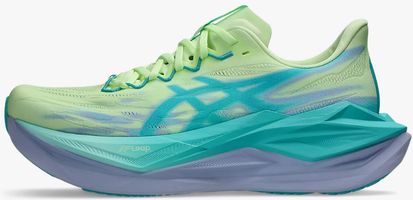
Why the Superblast 3

The common question to the Superblast 3 - what is it? Is it for me? Can I wear it on my long run? Can I wear it if I am a walker? 


We simplified this and told you why it was made, why people love it, and why it may not be for you. 


Why the Superblast 3 was made: The Blast series was created to bring enhanced energy return to daily trainers using innovations in foam technology. The Superblast combines ASICS' FF Blast Foam with their elite race-day foam (FF Leap) to create a shoe durable enough for high-mileage daily runs yet fast enough for race-pace training, making it one of the top "do-it-all" running shoes on the market.


Why People Love It: Thanks to its incredible versatility, the shoe became a massive hit—exceeding ASICS' expectations following mixed reviews of the Carbon Composite Foam in the Superblast 2. It has earned multiple "Shoe of the Year" titles and built a cult-like following. The Superblast ultimately kicked off the trend of super-trainers taking over the running industry.


Why the Superblast may not be for you: With its maximum cushion setup, it offers a plush, cloud-like ride off the ground rather than a firm, snappy bounce. It also fits slightly snugger and has less ventilation, which can feel warm in hotter climates like summer in Texas. Finally, if you intend to compete in elite or official races, the heel stack height exceeds the World Athletics limit by 6.5mm.


Check out the Superblast 3 specs below:  

If you’re still unsure if the Superblast 3 is for you, come in and see the experts at Rhodes Run Lab or go online at www.rhodesrunlab.com/superblast3 to find the Superblast if you know it's for you.


Superblast 3


Price

$200 - Premium (most shoes are about $157)


Weight (men’s 9) - 8.4oz 239g - Super light for its size


Heel stack

46.5 ~ 11mm more than average


Forefoot stack - 38.5mm ~10mm more than average


Heel To Toe Drop - 8mm - 8mm is about average for premium shoes, good for most stride lengths and cadences


Midsole - FF leap (top) + 10mm FF Blast Plus Bottom Bouncy race-day foam that degrades faster than standard foams, protected by FF Blast Plus—ASICS' main trainer foam that also enhances stability


Announced

Feb 13, 2026


Released

Mar 1, 2026


Race legal? - No - Not allowed in World Athletics-sanctioned races (max 40mm stack height limit)


Shock absorption Heel - 154 SA - How much impact the foam absorbs = greater joint protection (avg: 131)


Shock absorption Forefoot - 153 SA


Midsole softness  - 22.8 AC - Very soft (average is 35.5)


Traction - 1.05 - One of the best traction scores recorded by RunRepeat (average is 0.53)


Toe box width - 71.6mm - Slightly narrower (average is 73.2mm)


Energy Return - 67.8% - % of landing energy returned as bounce (average is 58.7%)

Let’s create what matters — together.

Rhodes Run Lab

More Posts

<p>Toe Socks Aren't Weird</p><p>Toe Socks Aren't Weird</p>

Toe Socks Aren't Weird

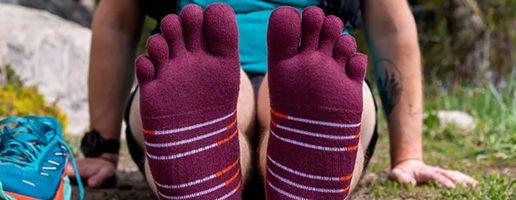
The first time you saw Injinji’s toe socks, your stomach probably turned a little. Five little fabric sausages, each one hugging a sweaty toe like a tiny wet glove. Ew. Why would anyone put that on their feet? But here’s the grosser truth: your regular socks are already a swamp. Five toes mashed together in one damp pocket, rubbing skin on skin for mile after mile, mustering up blisters, hot spots, and that smell you pretend isn’t coming from your shoes.


Those weird toe gloves might be the cleanest thing you ever do for your feet, and they may improve your running more than you’d expect. 


So why was Injinji made? Injinji was founded in 1999 in Southern California around one simple idea: your toes shouldn't be fighting each other inside your shoe. A traditional sock stuffs all five toes into one pocket, where they rub skin-on-skin for every single mile. Injinji gives each toe its own sleeve, letting your toes spread out naturally and cutting out the friction that causes blisters and hot spots. What started as a sock for runners now covers road, trail, ultra, hiking, and everyday wear.


Why do people love it? Once runners try them, most never go back. The individual toe sleeves pull sweat away from between the toes, which is exactly where blisters love to start, and that is a big deal in a humid Texas summer. The left/right specific fit and arch band keep the sock from sliding around, and the heel tab protects your Achilles from rubbing on the shoe. Injinji has become close to standard gear in the ultramarathon and trail running world, where one blister can end your race.


Why might Injinji not be for you? They take some getting used to. Putting them on takes a few extra seconds since every toe has to find its own sleeve, and they feel a little strange for the first few runs. If your shoe has a narrow or tight toe box, a thicker model like the Ultra Run can feel crowded, so pair it with a shoe that has a bit more room up front or pick a sock with a lightweight feel from Injinji. They also cost more than a basic multipack, at about $15 to $20 a pair. Finally, sizing matters more than with normal socks. Toe sleeves that are too long or too short get uncomfortable fast, so check the size chart before you buy. The last issue would be that your old socks won’t feel as good anymore. Maybe that one isn’t a negative anymore. 


Some good ole'toe socks may just revolutionize your running, walking, working, and life experience! 


Take Care of Those FeetTake Care of Those Feet
Take Care of Those Feet

In an article posted by the Harvard Medical School, a line was written that should strike us all. 


‘Your feet always support you, so return the favor’


Why do we take care of our hair with extensions, mid fades, and color but not our feet? Why do we take care of our face with face washes, lotions, and acne preventions but not our feet? Why do we take more care for our car and its monthly car wash memberships than we do our own feet? Why do we take more care of our lawns with fertilizer application than we do our own feet? 


Now, we are not talking about wearing shoes or not wearing shoes. We are not even talking about wearing the most expensive shoes on the market!


Here is the reality:  


We buy shoes based on the cheapest price or the best deal, without considering whether they are right for our feet.


We wear what is fashionable and forget to consider the well-being of our feet.


We cram our toes into shoes that make our feet look slimmer, sacrificing space and comfort for appearance.


We kick off our shoes after work and slip into flip-flops or house slippers, often without giving a second thought to the support our feet need.


And somewhere along the way, we have accepted this as normal.


Caring for your feet is so much more than just wearing a good shoe or washing your feet every day.


We have broken down 3 main categories that encourage a healthy foot:


Cleanliness


Mobility


Shoes/Inserts

Cleanliness - 

Cleanliness of the feet is beyond important! Proper foot hygiene could mean the difference between a healthy foot or not. Clean feet reduce the risk for fungus and bacteria to make their way over, around, or in the foot. The CDC has outlined proper foot hygiene in the following format:  


Wash your feet every day and dry them completely 


Properly trim your toenails


Change your socks at least once a day


Examine your foot regularly for sores, cuts, and wounds. 


Mobility - 


Have you ever felt tight in your foot? You probably are. Your foot is constructed of 26 bones and 33 joints along with 100s of muscles, tendons, and ligaments. It can be a well-oiled machine or a rusted piece of equipment for your body. At its healthiest, your foot will bring stability, absorb ground force, enhance your balance, and even improve overall human performance. We have outlined below some important tips and tricks to improve your foot's mobility. 


R3 Foot Roller from Rhodes Run Lab can be used to stretch the plantar fascia and intrinsic foot muscles to reduce soreness and improve recovery according to Roll Recovery.


Simply taking off your shoes and earthing or “grounding” with your feet in the dirt or grass can improve stress levels, mood, reduce inflammation, and more.


Investing into a toe spreader helps splay your toes to encourage a wider spread contrary to the average sock and shoe formation to your foot.


Toe curls and raises, arch raises, towel scrunches, flex and pointing, and even calf stretches can greatly increase foot strength, mobility, and health. 


Shoes/Inserts - 


Flip flops. House slippers. So easy to slip on but so bad for our feet. You can read our article about finding the right shoe for you, but something to think about with your feet is what you wear around the house. 


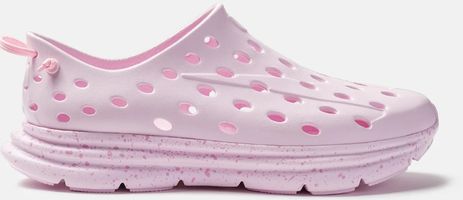
Introducing the Revive from Kane Footwear. The Revive or the Revive AC or the Revive OB (for kids and adults) are one of a kind. 


10mm heel to toe drop to relieve commons heel injuries and pressure (note: this may be different in kids sizing).


Wide toe box to encourage natural splaying.


Recovery nodes to promote blood flow


Foam derived from sugarcane for an all-natural feel.


Support for your arches.


Running/walking shoe mold designed

If you can begin to focus and take care of your feet, you will thank us in 20 years from now.


Becoming the Best Version of Yourself Starts WiBecoming the Best Version of Yourself Starts Wi
Becoming the Best Version of Yourself Starts Wi

I often get the response that is similar to the following when I talk to people about running: "Oh well you're skinny" "Oh well you used to run in a high school" "Oh well you own a running shoe store, so you have to like running". None of these things are the truth.


I cannot count on my fingers how many times I get told this. I am sure many more think this.


Here is the reality, I never was a runner. I didn't run in high school. I didn't run in college. Running was pure punishment for me growing up. I was a football player at heart. Did that include some running? YES!


But if I am being honest with you, that was never enjoyable. When every single rep is a max effort sprint to see who the fastest person in the school is, that is not just the most enjoyable activity in the world.


My fitness journey did not take shape until after high school and more specifically on December 14th of 2021.


I sat in the waiting room moments away from my jaw surgery which would correct my bite, open my collapsed airway, and more and thought about the next 5-6 months of recovery. 1 month of liquids. 1 month of soft foods. 1 month of a bit tougher food. 1 month of semi-normal food. 1 month of the majority of normal food. 6 months before my first steak or apple.


What was I going to do? The Doctor told me that for the 1st month I should not do anything but try to survive on liquids.


Working out or anything strenuous would cause everything to separate from my surgery.


Day 1 - "I'm hurting so bad"

Day 2 - "I don't know how I can do this"

Day 3 - Sydney says, "Let's try to walk to the end of the street and back" - I made it there and came back and was so exhausted I went to bed for 4 more hours, and it was noon in December.

Day 14 - Doctor says, "Good news ... starting on day 32 you can resume LIGHT activity like running slowly, swimming or biking"


Again, I was never any of these things. My worst nightmare.


I began to pick up running, biking, and swimming.


Well ... how do you even begin to do any of that? I did what every smart person would do. I went right outside, laced up my shoes with no warmup and took off running. I am sure I was sprinting and made it about half a mile and almost died. Let's try that again I thought …


I bought running shoes. I looked up online 'best running shoes for beginners'. I bought supplements from my favorite influencer.


Even with all of this, it was still torture for me. It was still a chore. It was a hassle. I didn't want to run or bike or swim. I hate all of these things with a burning passion or so I thought. I hated these things in high school for a fact. Maybe adulthood is the same.

But then I had a crazy idea ... let's go run an Ironman. I can't complete an Ironman without knowing how to properly train. I ordered Be Iron Fit, started reading, ordered a Timex watch, started swimming, bought a bike, started biking, and began my official training cycle from a PDF document I found on the internet.


You would think as deep into this process that I was, that I would enjoy it. Nope! I hated every second of the training. This is not who I am, I thought.


I completed the 70.3 Lubbock Ironman in June of 2022. I looked at Sydney and said "I will never do this again".


I knew I needed a goal or something to train for or else I would end up not working out at all. I researched and found a trail run in Warda, Texas called Wild Hare Ultra.


I signed up without hesitation. I had to do it now that I have paid for it.


Sold the bike.

Stopped swimming.

Started running.


Maybe I didn't hate running. Maybe I just hated the way I was running.


I researched how to run. I studied the sport. I studied the game. Read about my shoes. Read about my training. Read about it all.


As I took the trails that November 2022, I was ready. Even still my ankles screamed at me as they winced in pain during the entire day (because I was wearing the wrong shoe). I crossed the finish line just before 8pm that night with something new.


That was the first time I realized: maybe I didn't hate running. Maybe I hated running because I didn't know how to run. Maybe I hated running because I didn't have a reason to run.


Discipline matters. Consistency matters. But they aren't the starting point.


I had to find something I enjoyed. I needed something I was capable of improving at. I needed something that gave me a reason to keep showing up.


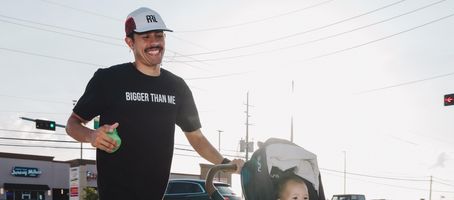
I found my Bigger Than Me!


That's a huge part of why Rhodes Run Lab exists. I don't want someone walking through our doors thinking they have to become a “runner.” I want them to find something they enjoy. Maybe that's running. Maybe it's walking. Maybe it's training for their first 5K. 


Maybe it's simply getting healthier so they can keep up with their kids.


Whatever it is, I want to help everyone figure out how to do it in a way that doesn't make them miserable.

Because I've been there.

I wasn't a runner. I didn't grow up loving this. I didn't wake up one day with incredible discipline.

I just found a reason that was Bigger Than Me.


If you want me to help you take those next steps at no cost to you, simply reach out to me by emailing our main store line at info@rhodesrunlab.com.
Best Shoe for MeBest Shoe for Me
Best Shoe for Me

What’s the Best Running/Walking Shoe?


Social Media Forum:


Person 1 - “What’s the best running/walking shoe?”


Responses to this person - “I have Brooks” “I hate Hoka, but I love Nike” “I run in the Gel Nimbus from ASICS” “Try Altra”


Person 1 - confused and overwhelmed by the options, not knowing what is actually best for them.


That question is hard to answer, even for me. I get asked all the time, “Out of all the shoes in this store, what is the best running shoe?”


I physically cannot answer that question. My follow-up questions: “Best shoe for the elite marathon runner?” “Best shoe for speed days or long run days?” “Are they 6’9” and 300 lbs?” “Are they in their 70s?” “Are you primarily walking in these or running?” “Do you overpronate?” “Do you have issues with your balance?”


Just a few questions…


The original question is near impossible to answer because, quite frankly, it depends.


There is nuance to it all.


Every foot is different, and every shoe is different. Just because one person loves the Brooks brand does not mean that is the perfect, end-all-be-all brand. Just because one person hates Hoka does not mean that every Hoka shoe is bad. Just because you tried a certain brand does not mean you hate the entire brand. Maybe you didn’t like that specific model within the brand.


What’s the best running/walking shoe?


Well… if you’re a 300 lb male standing at 6’9”, primarily walking with no specific time goal in mind, then I will recommend you a max-cushion daily training shoe to ensure we get the longest life out of the foam: FWD Via from Altra, Bondi from Hoka, Gel Slow Cush or Nimbus from ASICS, and so many more max-cushion shoes. Even this, primarily walking, indicates that there is more time on the feet. We may shoot for a more dense foam to ensure our shoe lasts the test of time, such as a Bondi from Hoka or a Cloudsurfer Max from On. Maybe we decide on the Bondi from Hoka… do we have Achilles problems not due to overpronation? In this case, this shoe would be terrible for this person. We want to elevate the heel to relieve so much pressure from the back of the leg. In this case, the Glycerin Max from Brooks, MagMax from Puma, and more would be the most beneficial.


Even in this scenario, my recommendation may not be what’s best for them. They may love a soft shoe. That’s fine!!! Did they need a wide shoe, or does their foot have a wider forefoot area? All of a sudden, the shoes we chose are no longer the best shoes for them.


The best shoe for you is the one that works for you.


So, the answer to the best running/walking shoe is complicated. Like a middle school relationship, it’s COMPLICATED!!!


At Rhodes Run Lab, we take the shoe-fitting process very seriously.


We analyze the foot. We look to see if there is any overpronation, supination, or a subtalar joint neutral positioning on your foot with the help of our Aetrex Albert Scanner. We walk you through a step-by-step fitting process, from the softness of the shoe to the support, ensuring your shoe fits like you want it to fit and is one that guides you to your goals.


We have also created our Shoe Finder quiz on our website as well. Simply visit www.rhodesrunlab.com/shoefinder. This does not replace our in-store expertise and experience. This is our most accurate way to give you the best results in an online format.


What’s the best running and walking shoe?


THE BEST SHOE FOR YOU IS THE ONE THAT WORKS FOR YOU!!!